Vue.js development

Vue.js development
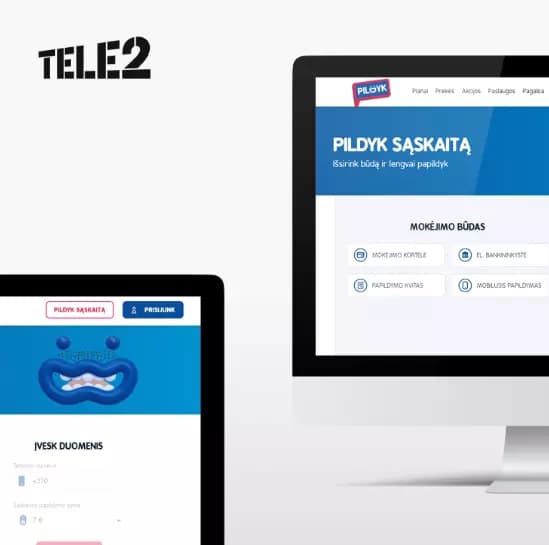
Vue.js is one of the leading JavaScript frameworks for front-end development, widely used alongside React and Angular in enterprise application development. Only the current major line is supported — the previous one is past end of life and no longer receives security patches — and recent releases pair a rewritten reactivity core with a modern toolchain of Vite, Pinia, and Vitest. Its progressive architecture allows it to be adopted incrementally — integrated into an existing system or used to build a complete single-page application. Vue is used in production by Nintendo, Adobe, Alibaba, Xiaomi, and Wizz Air, among others, and has a strong track record in high-traffic, operationally critical consumer and enterprise platforms. Toughlex has delivered Vue.js-based systems for enterprise clients, including a long-running engagement with Tele2 on the Pildyk self-service platform.Why Vue.js?
Vue.js has a lower initial learning curve than Angular and a more structured approach than pure React. Developers familiar with HTML, CSS, and JavaScript can contribute to a Vue codebase quickly, which reduces onboarding overhead when teams expand or change composition during long-running enterprise engagements.
Vue can be introduced into existing systems incrementally — replacing a single component or page before committing to a full migration. This makes it a lower-risk choice for organizations modernizing legacy interfaces without the option of a full rewrite.
Vue's reactivity system was rewritten around a signals-based core, cutting memory use and update cost for data-intensive interfaces without requiring optimization work from the team. Vapor Mode — an opt-in compilation strategy that emits direct DOM operations instead of going through a virtual DOM — is feature-complete and landing in an upcoming minor release, and it is designed to be adopted per component rather than as a rewrite.
Vue's single-file component format keeps template, logic, and styles co-located in a structured, readable way. This improves maintainability over time, particularly for systems developed by rotating teams where code clarity directly affects the cost and reliability of ongoing development.
Vue is backed by a large open-source community and a stable core team, with an officially maintained ecosystem — Vite for build tooling, Pinia for state, Vitest for testing, and Nuxt for server-rendered applications. Vue's commitment to backward compatibility within a major line, including for Vapor Mode, makes it a dependable long-term foundation for enterprise systems.
Vue.js powers production systems for some of the world's largest organizations — including Alibaba, Adobe, and Wizz Air — as well as Toughlex's own long-term delivery work on the Tele2 Pildyk self-service platform, which serves a large consumer base with ongoing 24/7 availability requirements.
When is Vue.js the right choice?
Vue.js works well for enterprise teams that need a capable, maintainable front-end framework without the full architectural overhead of Angular or the ecosystem fragmentation that can come with React. It is particularly well-suited to organizations with mixed-experience front-end teams, systems being modernized incrementally, and applications where long-term interface maintainability is as important as initial delivery speed.Vue's progressive adoption model allows it to be introduced into an existing codebase one component or section at a time — without requiring a big-bang rewrite. For enterprises with live systems that cannot tolerate operational disruption, this makes Vue a practical foundation for incremental interface modernization.
Vue's clean component structure and approachable syntax reduce the cost of maintaining and extending interfaces over time, particularly when team composition changes. For enterprise systems expected to evolve over years, maintainability is a more important selection criterion than initial development speed.
An end-of-life framework version means no security patches and a steadily shrinking pool of compatible libraries — a compliance problem as much as a technical one. Vue publishes an official migration build that allows a legacy codebase to be moved onto the current major line in stages, so the system stays deployable throughout rather than being frozen for the duration of an upgrade.
Vue's structured conventions and single-file components make it easier to maintain consistency as a development team grows. New engineers can contribute productively with lower ramp-up time, and code review remains tractable as the codebase expands.
Why Toughlex?
1
Full delivery pipeline: requirements, architecture, development, QA, deployment, and long-term maintenance — owned by one accountable partner.
2
Structured delivery governance: clear backlog management, sprint cadence, regular progress reporting, and early risk surfacing.
3
Senior engineering capacity: engagements are staffed with experienced engineers who take ownership of architecture and delivery quality.
4
Long-term partnership track record: most Toughlex engagements run two or more years, with teams that grow as delivery demands increase.
5
Compliance-aware cooperation: structured for regulated industries — audit trails, access controls, and documentation that meets enterprise governance requirements.
6
Transparent, accountable communication: honest estimates, clear status reporting, and no surprises on cost or timeline.
7
Professional liability coverage: €1M professional indemnity insurance, providing a credible and accountable commercial partner.
8
Proven enterprise delivery: 4.8 review score, TOP Company recognition in Lithuania, and a history of complex enterprise engagements across finance, telecom, insurance, and regulated industries.
9
European standards, international reach: a Lithuania-based team operating to European data governance requirements and enterprise operational norms, delivering for clients across the Baltics, the Nordics, Northern and Western Europe, and North America.

Projects
You want to be involved in the whole solution building process, but you expect contribution from us not in development only but in insights, ideas, project management or business development as well.
To Projects
Tech Partner
You know your end result. You don’t completely know how to get there, but you see the vision you want to bring to life.
To Tech Partner
Staff Augmentation
You want to control all aspects of your solution building process, including project management, but you don’t have enough development resources to meet your goals.
To Staff AugmentationBrands we work with
























Related case studies